



The Cost of Physical Inactivity
Physical inactivity is a pandemic health issue and is on the rise in many countries. Approximately 86% in the U.S. do not meet the minimum physical activity guideline recommendations (Booth et al., 2017). Insufficient physical activity has wide-ranging direct and indirect economic costs creating a substantial burden on societies and health-care. The development of chronic disease such as cardiovascular disease, type 2 diabetes, obesity and cancer is highly correlated with lifestyle factors such as physical inactivity (Durstine et al., 2013). Globally, the cost of physical inactivity to health systems and society is estimated to be $54 billion in direct health care with an additional $14 billion attributable to lost productivity (WHO, 2018).
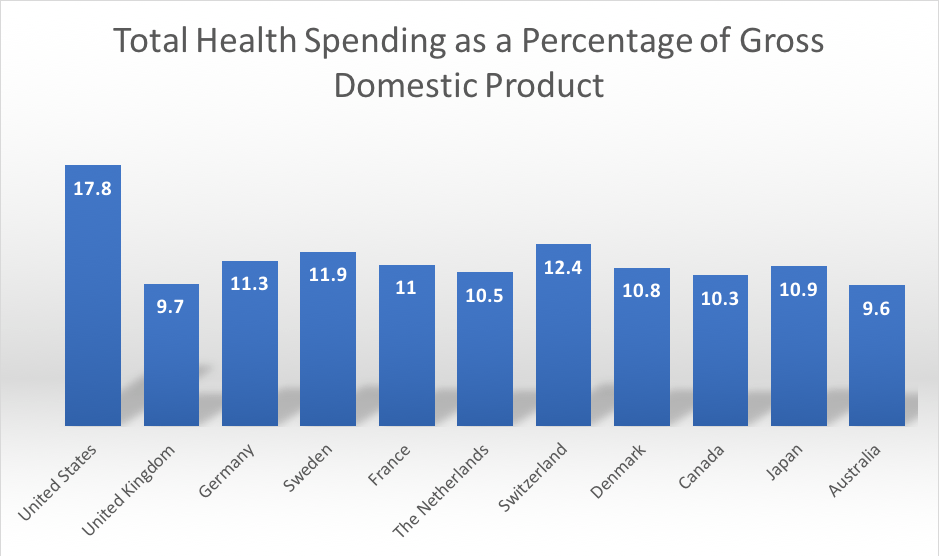
How does the health care spending in the U.S. compare with other high-income countries?
A recent article by the Journal of the American Medical Association examined this issue and concluded that the United States spends approximately twice as much as other high-income countries on medical care, yet utilization rates were comparable to other nations (Papanicolas et al., 2018). The authors further report that the United States consistently had the poorest population health outcomes. Although there are relatively low smoking rates, the U.S. had the highest percentage of overweight and obese adults as well as the lowest life expectancy of 78.8 years compared to an average of 81.7 years in other high income countries. (Papanicolas et al., 2018). Higher service fees for doctors and pharmaceuticals as well as higher administration expenses are some of the driving forces for the health care spending differences however attention to important determinants of health such as obesity is also highlighted as an area of focus to reduce health care spending.

Health care spending in the U.S. is on the rise and is now the largest source of jobs exceeding retail and manufacturing
Determinants of Health
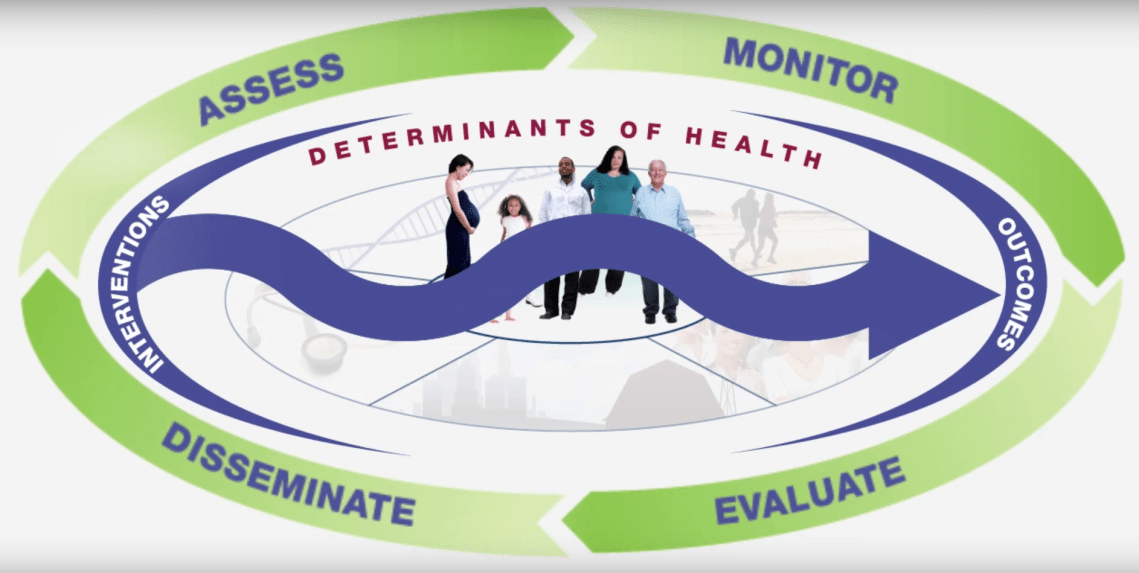
Given that determinants of health have been identified as a target for decreasing healthcare spending, it is important to understand the interplay of this important factor in ones health and longevity. The following video by Healthy People 2020 provides a brief review on determinants as well examples of interventions aimed at improving physical activity.
Office of Disease Prevention and Health Promotion, 2018
Physical inactivity is implicated as a primary cause of most chronic diseases. Substantial evidence demonstrates that physical activity and exercise are now considered primary and secondary prevention for several chronic diseases such as cardiovascular disease, diabetes, cancer, hypertension, obesity, depression and cognitive impairment. Therefore, directing urban planning to ensure accessibility and supportive infrastructure for physical activity such as walking and biking is an effective public health approach.
Sustainability
Ensuring a continual process of improvement involving four vital phases which include assessment, monitoring, evaluation and dissemination allows necessary refinement for effectiveness and sustainability (Office of Disease Prevention and Health Promotion, 2018).
The inefficiency of U.S. healthcare spending requires attention to many factors including the issue of higher service fees for doctors and pharmaceuticals as well as administration expenses. Public health efforts also have a vital role in addressing determinants of health. “A foundation of public health is the realization that health and illness have causes that go beyond biology and behavior” (Kohl et al., 2012). Structural and systemic changes such as managing the built environment to engage health determinants related to the physical environment are necessary to promote physical activity at the population level and subsequently reduce the financial burden of noncommunicable disease.
References
Booth, F. W., Roberts, C. K., Thyfault, J. P., Ruegsegger, G. N., & Toedebusch, R. G. (2017). Role of inactivity in chronic diseases: Evolutionary insight and pathophysiological mechanisms.(report). Physiological Reviews, 97(4), 1351-1402. doi:10.1152/physrev.00019.2016
Durstine, J. L., Gordon, B., Wang, Z., & Luo, X. (2013). Chronic disease and the link to physical activity. Journal of Sport and Health Science, 2(1), 3-11. doi:10.1016/j.jshs.2012.07.009
Kohl, H. W., Craig, C. L., Lambert, E. V., Inoue, S., Alkandari, J. R., Leetongin, G., & Kahlmeier, S. (2012). The pandemic of physical inactivity: Global action for public health.The Lancet, 380(9838), 294-305. doi:10.1016/S0140-6736(12)60898-8
Office of Disease Prevention and Health Promotion. (2018). Determinants of health. Retrieved from https://www.healthypeople.gov/2020/about/foundation-health-measures/Determinants-of-Health
Papanicolas, I., Woskie, L. R., & Jha, A. K. (2018). Health care spending in the united states and other high-income countries. Jama, 319(10), 1024. doi:10.1001/jama.2018.1150
Topol, E. [EricTopol]. (2018, Jan 07). For the 1st time in US history, the lines crossed in 2017. #Healthcare became our largest source of jobs, exceeding… https://t.co/Ud4JrmMuaf [Tweet]. Retrieved from https://twitter.com/erictopol/status/950014830831837184?s=21
World Health Organization. (2017). More active people for a healthier world: Draft global action plan on physical activity 2018-2030. Retrieved from http://www.who.int/ncds/governance/Global-action-plan-on-PA-DRAFT-2-Dec-2017.pdf

 One Health